
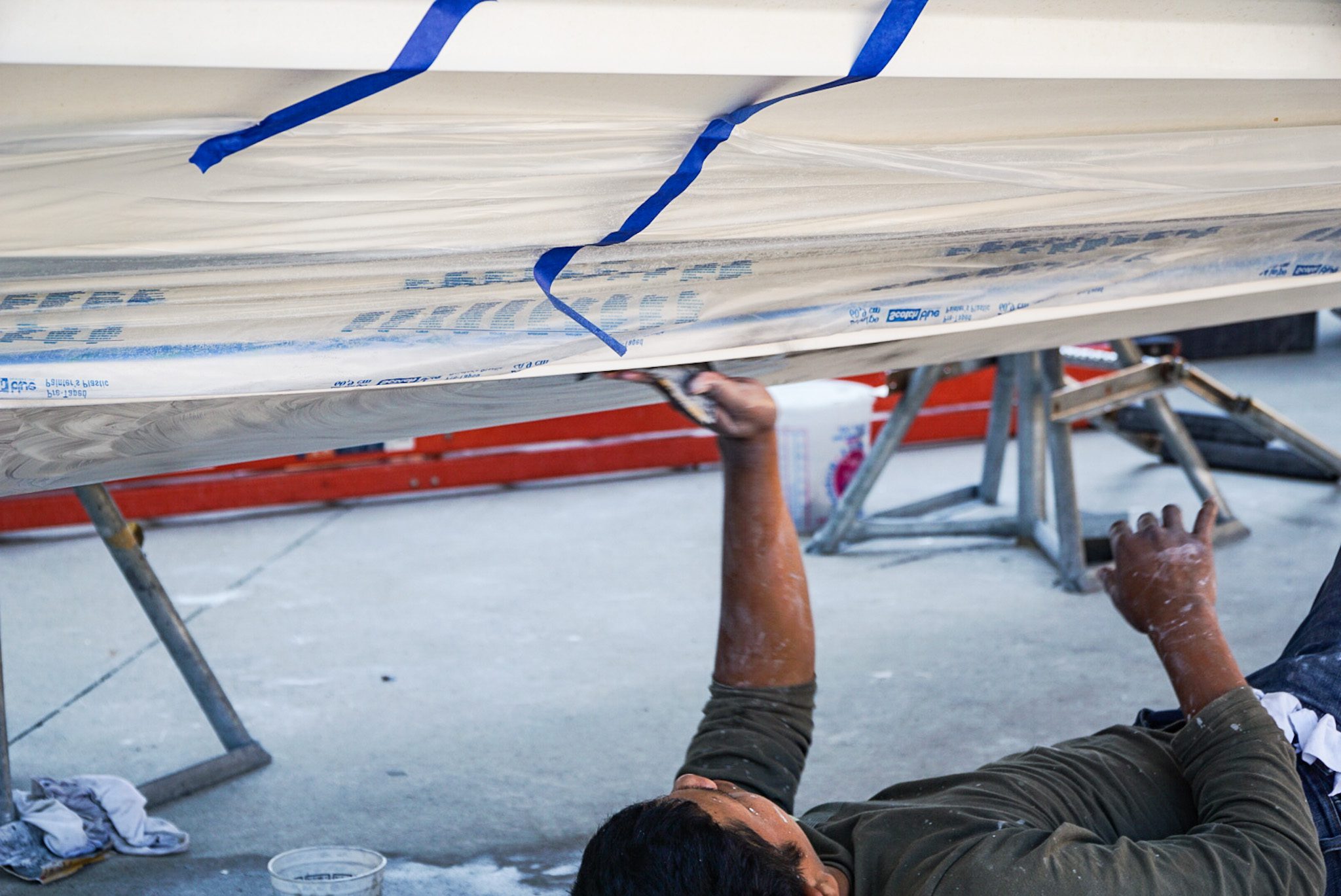
Maintaining your boat’s hull is essential for both performance and longevity, and an important aspect of this care is bottom painting. In this article, we’ll delve into the intricacies of the boat bottom painting process and why choosing Marina Bay Harbor for this task is the key to preserving your vessel’s seaworthiness and aesthetic appeal.
The Importance of Bottom Painting:
The underside of your boat, constantly submerged in water, is prone to the accumulation of marine growth, barnacles, and algae also known as hull scrum. Over time, this buildup can increrase boat drag which may lead to decreased fuel efficiency, reduced speed, and potential damage to the hull. Bottom painting serves as a protective barrier against these issues, providing a shield that not only enhances your boat’s performance but also prolongs its overall lifespan.
The Boat Bottom Painting Process:
1. Hull Inspection: Before the bottom painting process begins, a thorough inspection of the boat’s hull is conducted. This inspection identifies any existing damage, blisters, or imperfections that may need attention before the paint application.
2. Hull Preparation: The hull is then carefully cleaned and stripped of any existing paint or coatings. This step is key for ensuring proper adhesion of the new bottom paint. Marina Bay Harbor employs skilled technicians who use industry-standard techniques to prepare the hull surface effectively.
3. Priming (If Necessary): In cases where the hull has been stripped down to the bare substrate, a primer may be applied. The primer enhances the bonding between the hull surface and the bottom paint, creating a strong foundation for the protective coating.
4. Choosing the Right Bottom Paint: Selecting the appropriate bottom paint is an important decision. The choice often depends on factors such as the type of boat, the water conditions it navigates, and whether it is used in freshwater or saltwater. At Marina Bay Harbor, experienced professionals guide boat owners in choosing the most suitable bottom paint for their specific needs.
5. Application of Bottom Paint: With the hull prepared and the right bottom paint selected, the application process begins. Skilled technicians at Marina Bay Harbor employ meticulous techniques to ensure an even and thorough coating. Proper application is necessary for the paint to serve its protective function effectively.
6. Multiple Coats (If Necessary): Depending on the type of bottom paint selected, multiple coats may be applied. Antifouling coats contain biocides that deter the growth of marine orgnaisms and can greatly reduce the adhesion of fouling organisms to the hull of the boat. Marina Bay Harbor follows manufacturer recommendations to ensure that the specified thickness is achieved, providing optimal protection against fouling and corrosion.
7. Drying and Curing: After the application, the boat is allowed to dry and cure. This final key step is for the bottom paint to bond with the hull and form a durable, protective layer. The drying and curing process is carefully monitored to ensure the effectiveness of the paint.
Why Choose Marina Bay Harbor for Bottom Painting:
1. Expertise in Boat Maintenance: Marina Bay Harbor is renowned for its expertise in boat maintenance. Our marina’s team includes skilled technicians with extensive experience in bottom painting, ensuring that your boat receives professional care.
2. Comprehensive Service Approach: Beyond bottom painting, Marina Bay Harbor offers a comprehensive range of boat maintenance services. This integrated approach allows boat owners to address multiple needs in a single visit, streamlining the maintenance process.
3. Use of Quality Products: Marina Bay Harbor prioritizes the use of top-quality bottom paint products. Our marina has access to a variety of reputable brands and types, ensuring that boat owners can choose paints that align with their specific boating conditions.
4. Customized Guidance: Choosing the right bottom paint involves considering various factors. Marina Bay Harbor provides customized guidance, taking into account the type of boat, its usage, and the waters it navigates. This personalized approach ensures that boat owners make informed decisions.
5. Efficiency and Timeliness: Marina Bay Harbor understands the importance of timely maintenance. The marina’s efficient processes and skilled technicians ensure that bottom painting is completed promptly, minimizing downtime for boat owners.
6. Commitment to Customer Satisfaction: Marina Bay Harbor is dedicated to customer satisfaction. The marina’s commitment extends beyond the quality of work to providing a positive and seamless experience for boat owners, fostering trust and loyalty.
Elevate Your Boat’s Performance and Aesthetics with Marina Bay Harbor
In the world of boat maintenance, bottom painting stands out as a crucial step toward preserving your vessel’s integrity and performance. Choosing Marina Bay Harbor for this task ensures that your boat receives expert care, from meticulous hull inspections to the application of high-quality bottom paint. Trusting Marina Bay Harbor means investing in the longevity of your boat and enjoying enhanced performance on every boating journey. Bring your boat to Marina Bay Harbor for bottom painting, and let the experts ensure that your vessel is well-equipped to navigate the waters with both style and efficiency.